
Executive Burnout: The Warning Signs Leaders Ignore
The most common warning signs of executive burnout are:
- Exhaustion that rest doesn't fix
- Growing detachment or cynicism
- Declining decision quality
- A shorter fuse than usual
- Working more while achieving less
Leaders miss these signs because they look like the normal cost of responsibility. They're not.
They're the early stages of something that will eventually stop you, one way or another.
I'm not writing this one from research alone. I'm writing it because I've been there.
My story: the reset I didn't choose
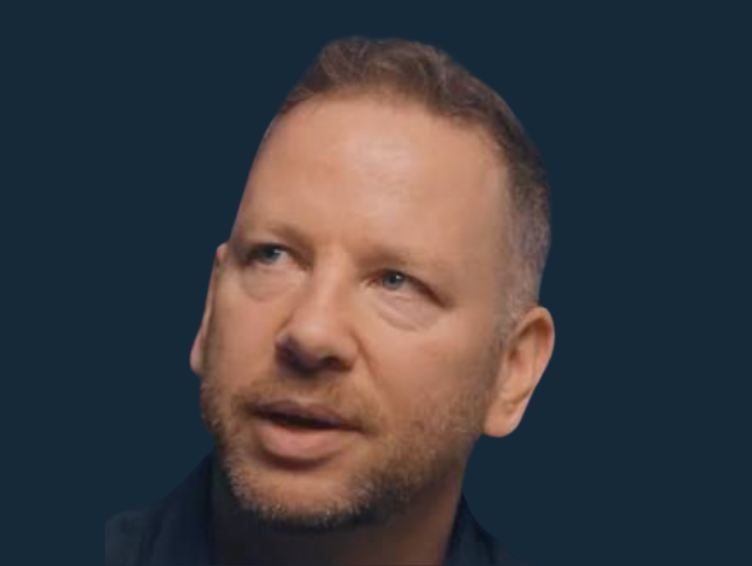
Earlier in my career I was running a successful business at full capacity. And I do mean full capacity. Every decision came through me. Every problem landed on my desk. I was the engine, the fuel, and the driver, and I wore that like a badge.
From the outside it looked like drive. From the inside, the pressure was quietly building. And eventually it began to impact my health and my clarity. Not in one dramatic moment, but in a slow erosion I kept explaining away. I told myself it was a busy season. That I'd rest after the next milestone. There's always a next milestone.
I loved what I did and motivation was high, but I didn't see the slow onset of burn out that was coming over me. Not sleeping great, always distracted by the next task.
I was in my twenties, travelling, speaking on amazing stages and all the while my nervous system was in overdrive. I thought this is what being a high performer was all about.
But eventually I would be proved wrong.
One day in the gym, I collapse. Many of you know the story as I share it in my book Break Through. But for those who don’t I was rushed to hospital, in my twenties and treated for a suspected heart attack.
Turned out is was exhaustion. It was the hard stop I didn't see coming.
It forced a complete reset. And here's the part that matters for you. What changed my situation wasn't more effort, more discipline, or a better morning routine. It was structure.
Systems that reduced how much depended on me.
Clearer thinking about what actually needed my attention. A more controlled way of operating. That reset didn't just protect my health. It became the foundation of how I now coach founders, high-performers, executives and business owners, because I recognise the pattern in them long before they do.
Why leaders ignore the signs

Here's what I see in coaching every week. Senior people are brilliant at spotting burnout in their teams and blind to it in themselves. There are 3 reasons for that.
First, identity. If you've built your career on being the person who copes, admitting you're struggling feels like a demotion. So you don't admit it, not even to yourself.
Second, function. Executive burnout is high functioning burnout. You're still hitting targets. Still chairing the meetings. Still answering the emails at 11pm. The wheels haven't come off, so you assume the engine is fine.
Third, culture. In plenty of Irish businesses, exhaustion is still worn as proof of commitment. Nobody wants to be the first to say the pace isn't sustainable.
This isn't rare

If you think you're the only one running on empty, the data says otherwise.
Research by Gallup and Workhuman found that 3 in 10 Irish employees feel burnt out "very often" or "always", placing Ireland among the worst in Europe for burnout, level with the UK and Belgium (Silicon Republic).
An Irish review published in the Medical Research Archives found that roughly 18% of Irish workers are affected by occupational stress each year, one of the highest rates in Europe.
And remember, those are workforce-wide numbers. The pressures concentrate at the top. The more responsibility you carry, the fewer people there are above you to notice you're struggling, and the more skilled you've become at hiding it.
The warning signs leaders ignore

Burnout rarely announces itself. It arrives disguised as ordinary life. Here are the signs I watch for in the leaders I work with, and the ones I missed in myself.
- Rest stops working. You take the weekend, the holiday, the early night, and you're still exhausted on Monday. Tiredness that sleep fixes is normal. Tiredness that sleep doesn't touch is a warning.
- Your decision quality drops. Decisions you'd once make in minutes now sit for weeks. Or you make them impulsively just to clear them off your desk. Both are the same symptom wearing different clothes.
- You feel detached from work you used to care about. Your successes don't land anymore. You catch yourself going through the motions in meetings that once energised you.
- Your fuse gets shorter. Irritability with your team, your family, or the driver in front of you. If people close to you have started treading carefully, take that seriously.
- You're working more and achieving less. Longer hours, fuller diary, thinner output. Effort is going up while impact is going down. That gap is burnout's signature.
- Your body starts sending invoices. Poor sleep, headaches, tension, getting sick more often. The body keeps an honest account of what the mind refuses to acknowledge.
- You stop seeing a way to change it. The most serious sign of all. When "this is just how it is" becomes your answer, you've stopped leading your own life.
If you recognised yourself in 3 or more of those, don't file this article away for later. Later is how leaders end up learning this lesson the hard way.
What to do about it: structure, not more effort

The instinct of every high performer in trouble is to try harder. More discipline. Earlier mornings. Push through. I understand the instinct, and I'm telling you it's the wrong tool. You cannot out effort a problem that effort created.
What works is what I had to learn the hard way.
- Reduce what depends on you. If every decision routes through your desk, that's not commitment, it's a design flaw. Build systems and empower people so the business can breathe without you.
- Protect your thinking time. Clarity is a leader's most valuable output, and it's the first thing burnout takes. Guard the space where clear thinking happens as fiercely as you'd guard a client meeting.
- Decide what actually needs you. Most leaders I coach are carrying dozens of tasks that feel urgent and aren't theirs. Cutting them isn't slacking. It's leadership.
- Say it out loud to someone. A coach, a peer, a trusted friend. Burnout grows in silence. Naming it is the first move that shrinks it.
- See your doctor about the physical signs. I'm a coach, not a medic. If your sleep, your health, or your mood has changed, talk to your GP. That's not weakness. That's data gathering, and good leaders gather data.
Final thoughts

Burnout took me by surprise because I thought the rules didn't apply to me. 20 years of coaching later, I can tell you the rules apply to everyone.
The strongest leaders I know aren't the ones who never hit the wall. They're the ones who learned to read the warning signs, redesigned how they operate, and came back leading better than before.
If any of this landed a little too close to home, that's not a reason to feel bad. It's information. The question is what you do with it.
I write a newsletter for leaders on how to lead a business that doesn't run on your nervous system. Practical, no fluff, straight to your inbox. Sign up here.
Onwards and upwards,
Mark
The views shared in this blog are drawn from coaching experience and should never replace professional medical advice. If you have concerns about your physical or mental health, please speak with your GP or a qualified health professional.