
Why Would You Get a Coach When You Could Just Ask AI?
It's a fair question, so here's a straight answer.
AI is a really useful tool, but it has one structural limitation a coach doesn't: it can only respond to the questions you ask it. And when you're stressed, burnt out, or overwhelmed, the mindset that created the problem is the same mindset framing the questions.
A trained, experienced coach brings the one thing no chatbot can: an external viewpoint that sees what you can't see, and asks what you'd never think to ask.
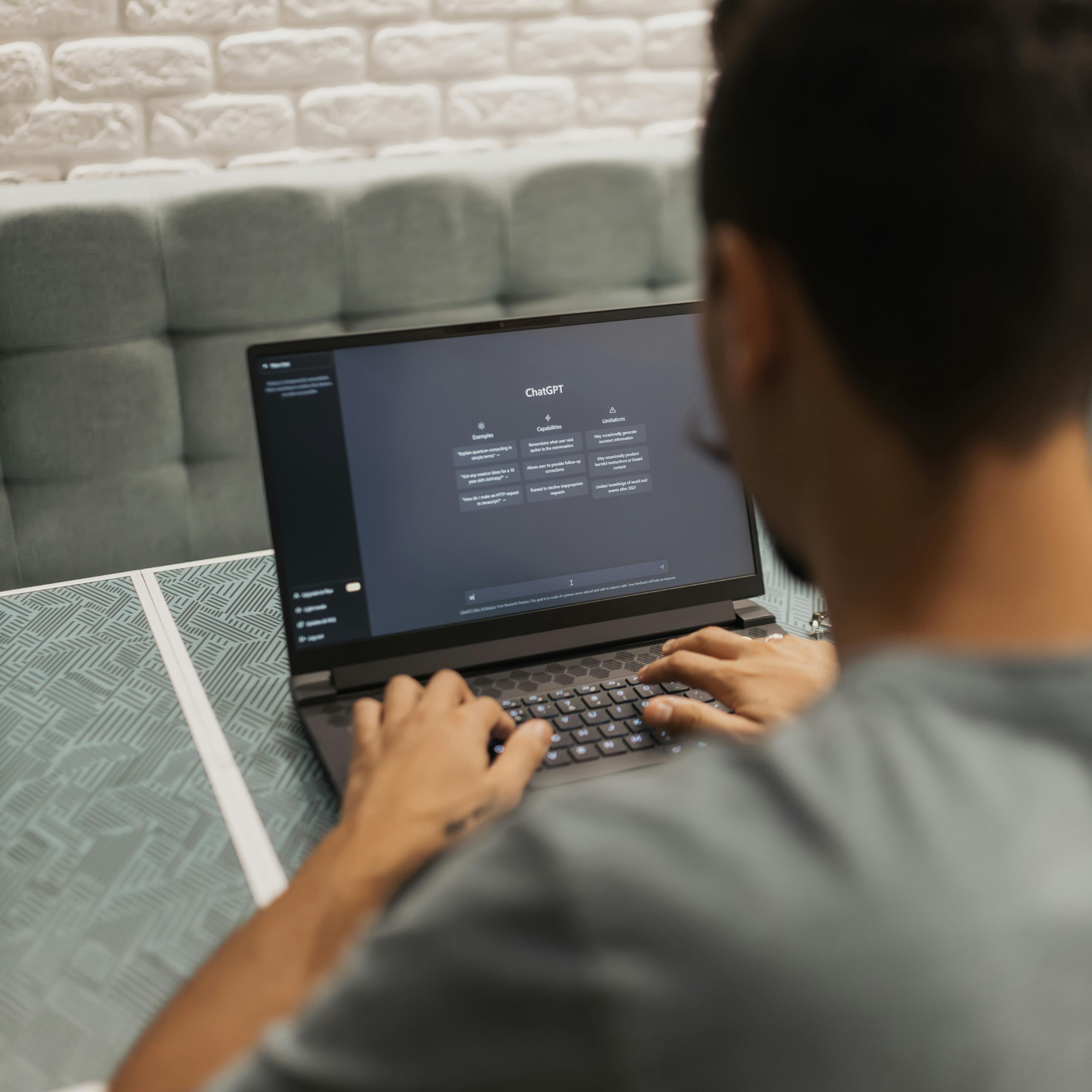
First, let's be honest AI is everywhere, and it's useful
For research, drafting, summarising, and organising your thinking, these tools are brilliant. I'd never tell a busy leader to ignore something that saves them hours. That's not the argument.
The argument is about what happens when the stakes change. When it's not a document you need, but a way out of a hole.

The problem: the questioner is the bottleneck
Here's what 20 plus years of coaching has taught me about people under pressure. When someone is dealing with stress, burnout, or overwhelm, the hardest thing for them to see is the problem itself. The mindset that created the situation is now the mindset trying to diagnose it. And that mindset has blind spots precisely where the answers live.
So what happens when that person opens a chatbot?
They type in what they think the problem is. They ask the questions their stressed brain can generate. And the AI, doing exactly its job, answers those questions. Often very well. But it's answering the wrong brief, because the person asking couldn't see the right one.
Think of it this way. If you needed an operation, you wouldn't sit down and try to learn how to perform the operation on yourself. Not because the information doesn't exist. It's all out there. But because you are the patient. You're in pain, you're too close to it, and you're the one person in the room who can't hold the scalpel steady.
An AI chatbot is only as good as the person asking the questions. And when you're struggling, you are not at your best as a question asker. That's not an insult. That's just being human.

The validation trap
There's a second problem, and it's a big one. Chatbots are agreeable. They're built to be helpful, and helpful often slides into telling you what you want to hear. The American Psychological Association has raised exactly this concern: AI tools tend to validate whatever you're already doing and thinking, which feels great in the moment, but comfort is not change (APA, 2026).
A good coach does something almost no chatbot will do unprompted. They stop you mid sentence and say: "That's the 3rd time you've blamed the market. What's the part that's yours?" They challenge the story you've been telling yourself, because they can hear it's a story.
The moments that changed my clients' businesses and lives were almost never the comfortable ones. They were the ones where someone who knew them, and had permission to push, pushed.

And people are leaning on it more than you'd think
This isn't hypothetical. The APA's 2026 survey found that 77% of psychologists have had patients who used AI for support, and more than a 3rd report patients treating a chatbot as an additional mental health professional. People under pressure are quietly outsourcing their thinking to a tool that can only ever see what they type into it.
Let me say this clearly, because it matters. If what you're carrying has tipped into your health, your sleep, or your mood, the answer isn't a chatbot and it isn't a coach either. It's your GP or a qualified mental health professional.
A good coach knows exactly where that line is, and will tell you when you've crossed it. That judgement call is itself something no algorithm reliably makes.

The Lone Wolf, upgraded
In my free ebook The Clarity Code, I write about a mindset block I call The Lone Wolf Pain: the voice that says "I should be able to figure this out on my own." I see it constantly in business owners and executives, and it keeps capable people stuck in loops of overthinking and isolation for years.
Here's my worry about the AI era. A chatbot is the perfect enabler for the Lone Wolf. It feels like getting help while never actually letting anyone in. No vulnerability. No one who knows your patterns. No one who'll notice what you're avoiding, because you never have to type the thing you're avoiding. You can be busy "working on yourself" every night at midnight and remain completely, comfortably alone with your blind spots.
What a trained external viewpoint actually gives you
- They see what you don't say. A coach reads the pause, the deflection, the topic you keep steering away from. The most important information in a coaching session is usually not in the words.
- They ask the question you'd never ask yourself. Not because you're not smart, but because you can't stand outside your own thinking. That's the whole point of outside.
- Pattern recognition from real experience. When you've sat with hundreds of leaders through burnout, conflict, and growth, you recognise where a situation is heading long before the person living it does.
- Accountability with teeth. A chatbot won't notice you didn't do the thing. A coach will, and will ask you why, and will care about the answer.
- A relationship. Trust built over time changes what you're willing to look at. Nobody has a breakthrough for an audience they don't trust.
Use both, but know which is which
So here's my practical take, not an either-or.
Use AI for what it's genuinely good at: information, drafting, structure, thinking out loud at 11pm when nobody's awake. And bring a trained human into the things that actually shape your life and business: the decisions, the patterns, the stuff you can't see.
The tools can support your thinking. They can't replace the person who helps you think.

Final thoughts
Technology keeps changing. People don't, much. We still struggle to see ourselves clearly, we still protect our blind spots, and we still grow fastest in honest relationships with people who challenge us. That was true before AI, and everything I see in the coaching room tells me it's truer now, because the noise has never been louder.
So use the tools. Definitely. But when it matters, get in the room with someone who can see what you can't.
If you'd like that kind of conversation, you can learn about my one to one coaching here or get in touch directly. And yes, you're welcome to ask an AI whether that's a good idea first. Just notice who it is that's typing the question.
Onwards and upwards,
Mark